

Share
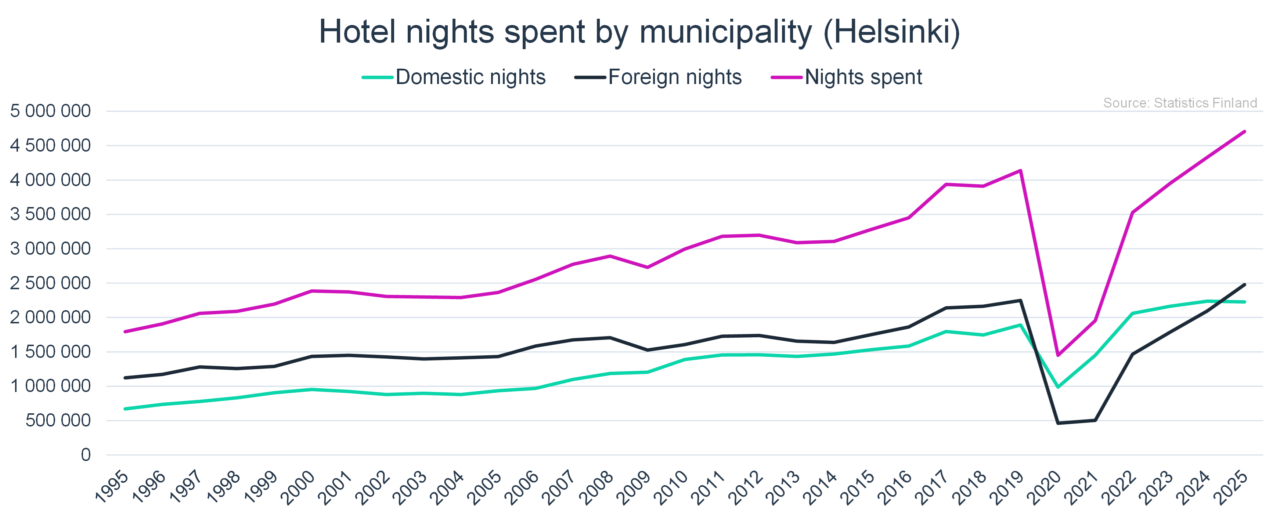
In the years following the pandemic, the hotel market has developed in a positive direction year after year. The total number of overnight stays reached a record high last year. Growth in tourism was particularly strong outside the peak seasons. During the spring shoulder season, overnight stays increased by 16% across Finland and by as much as 24% in the HMA. In Lapland, the strengthening of year-round tourism was also reflected in rising summer overnight stays, which has long been a strategic objective for the region.
The strengthening of international demand is driven by global trends. Finland has benefited from its cool summers, strong winter tourism offering, and the appeal of nature, space, and safety. Finland is currently the leading congress destination in the Nordics. In addition, the number of events with more than 25,000 participants in Helsinki doubled last year. The outlook remains strong. Air travel forecasts indicate that international tourism growth will continue in summer 2026. Between June and August, international air passenger traffic to Finland is expected to grow by 13% compared to the previous summer.
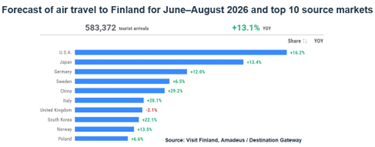
”Foreign tourism to Finland increased significantly last year and at a faster pace than the European average, according to Visit Finland. In fact, tourism growth over the past two years has been driven entirely by international visitors. In Finland, overnight stays by foreign tourists increased by 12% last year. In the Nordics, growth averaged 11%, while across Europe overall it was only 3%. The “coolcation” trend—where travellers seek cooler and less crowded destinations—has strengthened. Broader global trends are increasingly favoring northern destinations, which is also reflected in the data”, summarizes INNA’s real estate analyst Anton Takkavuori.
The South Still Has a Way to Go, While the North Is Gaining Momentum
Last year, Helsinki recorded an all-time high in the number of overnight stays, and overall volumes have fully recovered from the decline caused by the COVID-19 pandemic. However, the development in occupancy rates in Helsinki primarily reflects the significant increase in hotel room supply between 2019 and 2024. According to Statistics Finland, hotel room occupancy in Helsinki was still just below 75% in 2019, while in 2025 it stood at 63.7%. The development of new hotel projects in Helsinki has slowed considerably, which supports the market position of the existing hotel stock. At the same time, as international overnight stays continue to grow, an upward trend in occupancy
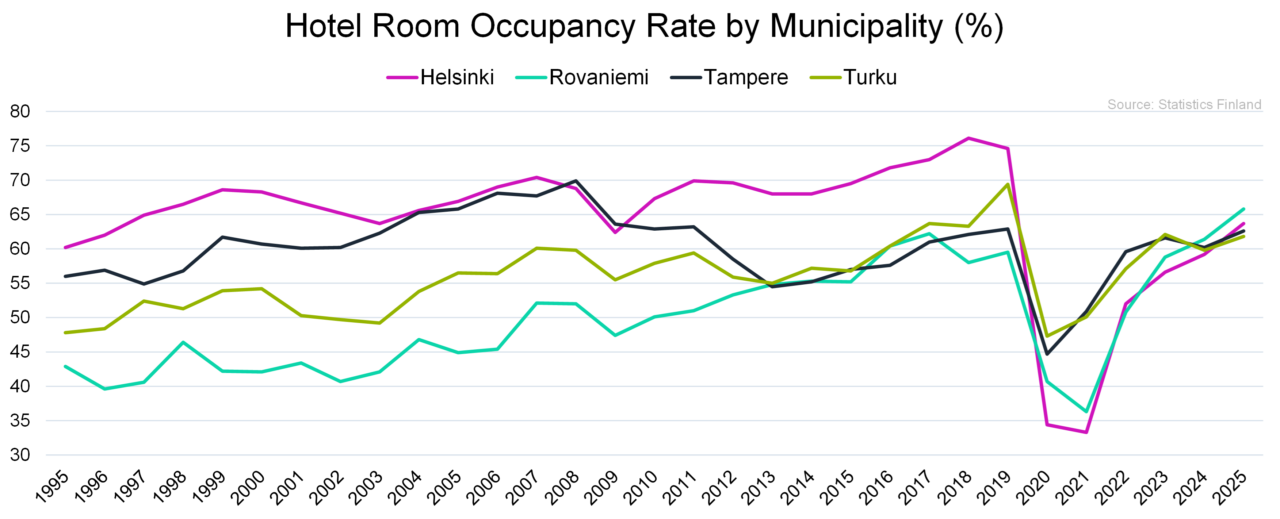
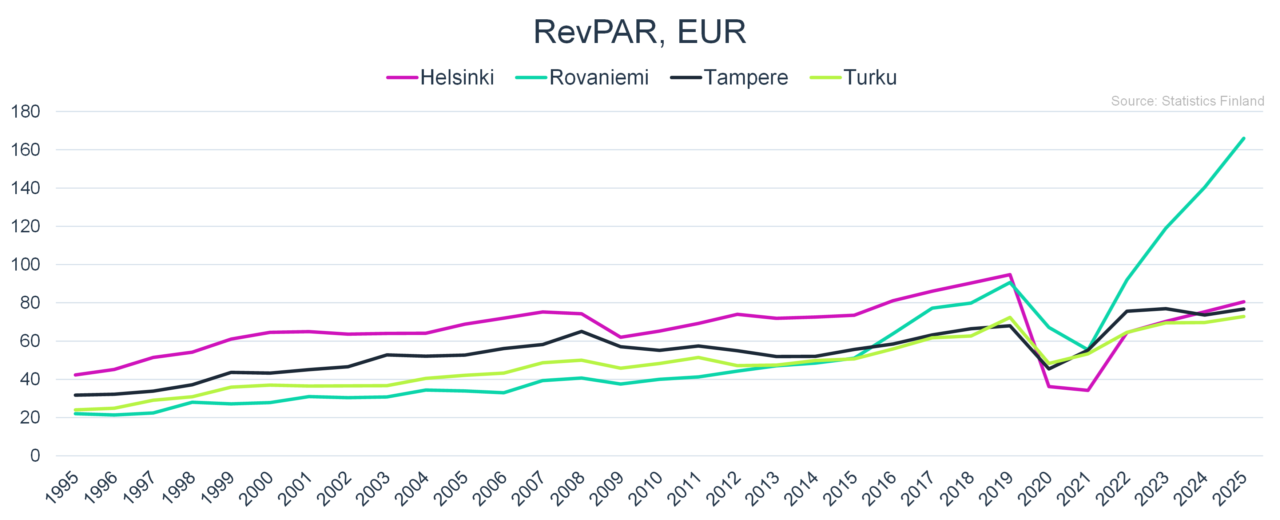
Improved occupancy rates have supported moderate growth in RevPAR (Revenue per Available Room) across key tourist cities. In contrast, the development of ADR (Average Daily Rate) varies significantly between southern and northern tourist destinations. In Helsinki, ADR has remained under pressure, while in Rovaniemi and the broader Lapland market both ADR and hotel occupancy rates have developed positively.
At the regional level, average hotel room prices increased the most in Lapland last year, where the average room rate reached approximately €207 in 2025. In Rovaniemi, average prices were even higher. Rovaniemi and other Lapland markets have therefore clearly outperformed the broader market.
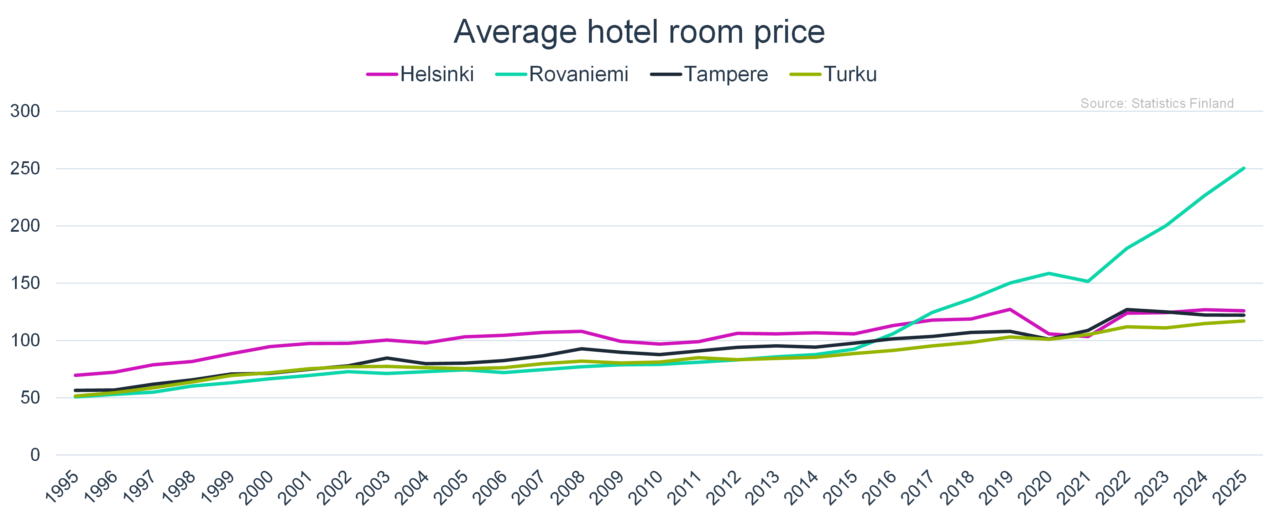
Overall, RevPAR developed positively across key tourist cities in 2025. In Southern Finland, growth has largely been driven by higher occupancy rates, while ADR has remained broadly flat for a prolonged period, for example in Helsinki. Although demand for hotel rooms in the Helsinki metropolitan area has strengthened year after year following the pandemic, pricing power remains limited. A key trend to monitor is whether strengthening demand will eventually translate into ADR growth in the coming years.
In contrast, in Rovaniemi both ADR and occupancy rates have increased, resulting in significantly stronger RevPAR performance compared to the broader market, as reflected in its steeper growth trend. In Helsinki, RevPAR has not yet returned to pre-pandemic levels, although the overall trend has been positive in recent years.
Domestic tourism growth is still waiting to take off
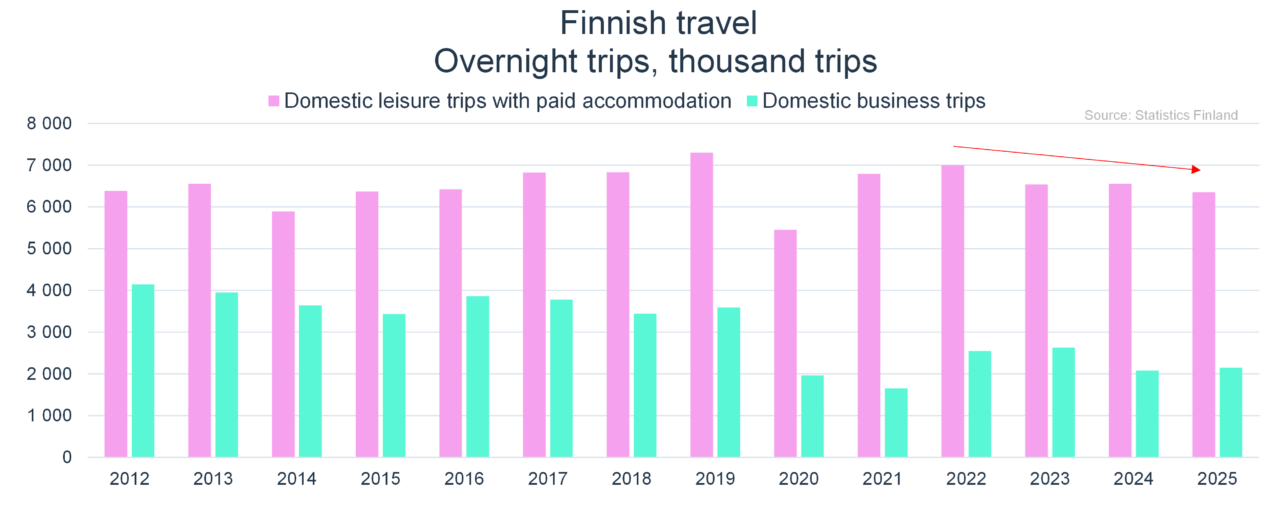
Changes in the number of overnight stays by domestic travellers were relatively small in 2025 compared to the previous year, according to Statistics Finland. However, without international demand, the overall tourism market would have been in decline, as domestic tourism has slightly decreased. In accommodation statistics, the share of domestic travellers is particularly high outside Helsinki and Lapland, typically accounting for over 80% of overnight stays. As such, the domestic consumer remains a key driver when assessing the Finnish hotel market as a whole.
“The outlook for international overnight stays ahead of the peak season is positive. Domestic tourism, however, remains something of a wildcard. In recent months, the number of domestic overnight stays has remained at last year’s level, and attention is already turning to July, when domestic travel demand typically reaches its annual peak. When tourists visit year-round, services remain profitable and can continue to develop. The impact of tourism is also reflected in jobs, service offerings, and the vitality of cities. Year-round demand is further supported by business travel, which helps smooth out seasonal fluctuations. As the economic situation strengthens, there is still significant growth potential in both domestic tourism and business travel,” concludes Takkavuori.
Contact us