
Share
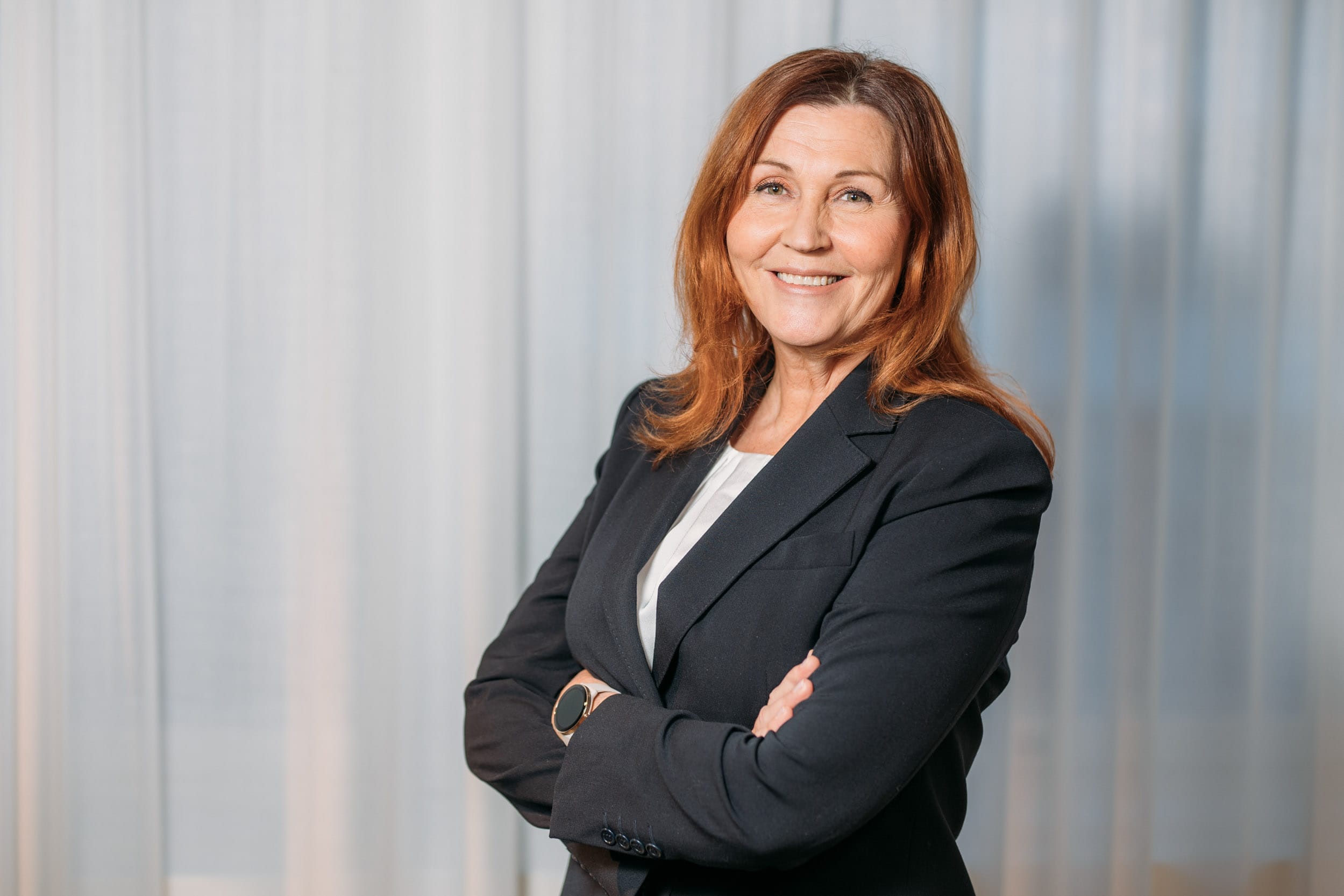
When Retta Management became INNA Finland in early 2026, the new name emerged from workshops with employees. CEO Minna Toiviainen explains how INNA approaches property management in Finland, and why clients’ properties are treated as if they were our own.
On the PowerPoint slides in the celebration hall, a stick figure ran along, deliberately stumbling every now and then. Music played in the background, while the story unfolded through speech bubbles. CEO Minna Toiviainen’s presentation looked back on the years gone by, and the stumbling was part of the story: everyone has moments when things do not quite go to plan.
Sitting in the room were the people who had done all the great work being shown on stage. The new name was unveiled at the staff celebration, and on the same day it was announced that Retta Management, Retta Sweden and Denmark’s Cobblestone would join forces, with the INNA brand introduced across all three countries.
The atmosphere in the room was emotional. One property manager described it like this: “It actually brought a tear to my eye. And to the person sitting next to me, too.”
“We had never celebrated together like this before. On similar occasions in the past, we had always been part of something bigger,” says Toiviainen. This time, the day had been created by the company itself, to celebrate the shared journey and the work that people across the organisation had put their hearts into.
Hearts are, in fact, a familiar symbol at INNA and appear in proposals and presentations too. “For us, they represent a little playfulness and genuine care about how the people around us are doing.”
Alongside that playfulness is a clear sense of direction. Growing the business is the starting point: you need to know where you are going, what you are doing and how you are going to get there.
“We want to grow, and we genuinely want to be an energetic frontrunner. That is something we work hard for,” she says. “But you can only achieve those things in a company where people are doing well.”
A brand created in workshops
The INNA brand was built together with employees in nearly twenty two-hour workshops. The sessions explored the essence of the brand and generated ideas for its name. INNA was one of the suggestions that emerged.
“Our people own this brand. Everyone had the opportunity to take part.”
Toiviainen sees the creation process as something quite exceptional. “I don’t know how many brands have actually been created by their own employees. Probably not very many.”
Internally, the new brand was easy to embrace. Employees had been involved in discussions about the renewal since the previous spring, and many had taken part in creating it themselves. “It really didn’t come as a surprise to anyone.” The transition was smooth for clients too, as the technical preparations had begun well in advance.
Two foundations: getting the everyday basics right and developing smarter ways of working
Great service starts with the everyday basics.
“Clients get the service we have agreed on and promised. It works seamlessly and reliably, so they know they can genuinely count on us. We do what we say we will do. Perhaps the best way to put it is simply: we get things done.”
The service also adapts to the client. “Of course, we have our own processes and tools, but they are flexible enough to accommodate the changes that matter to the client. Often, those changes also provide the best input for developing our services further.”
Clients say the same. A total of 118 clients responded to the spring customer satisfaction survey. Of these, 98 per cent said working with INNA was easy and smooth, while 97 per cent considered the company’s operations professional. One respondent described the company’s strengths like this: “Speed and flexibility: if we need a new reporting model up and running the same day, they make it happen.”
The second foundation is development, but selectively. It is not about doing everything for everyone all the time, but focusing on the areas that make a genuine difference to the client’s business. The team also regularly considers whether something could be done more efficiently, more enjoyably or more easily from an employee’s point of view.
INNA’s Development Director meets with clients several times a week, either in meetings or workshops, because good ideas do not only emerge behind a desk. According to Toiviainen, INNA was first to market with residential e-commerce, dynamic rental pricing and incorporating the client’s own brand into customer communications.
There is no single explanation for flexibility
In the survey, 92 per cent of respondents described INNA as flexible and quick to respond. A year earlier, the figure had been below 70 per cent. Asked what changed in between, Toiviainen does not point to any single reason.
She believes improvements in reporting have played a part. Several clients have said that INNA offers the best reporting on the market because it provides the information they actually need. The company has also introduced tools that enable greater flexibility in day-to-day operations.
But above all, she talks about people. “In a service business, people are everything. Expertise, motivation, wellbeing and enjoyment are at the heart of it.” Supporting these always requires both the employee and their manager to play an active role. It takes open conversations and the right actions.
That is why INNA invests in good leadership and people management. Managers can complete an industry-specific qualification, monthly manager sessions are held on current topics, and HR provides close support. The aim is to make sure managers have the tools they need when a situation arises.
If an employee says their workload is too heavy, Toiviainen explains that the manager will look at the situation from three perspectives. Is the process working, and are there enough people to do the work? Is it a question of skills, requiring more training or support? Or could the issue be related to wellbeing or the employee’s personal circumstances?
“My property”
Toiviainen recalls overhearing a conversation between two colleagues working with the same client. They referred to the property as “my property” and the tenants as “my tenants”.
The idea is simple: when you look after a property as if it were your own, things tend to go well. “People generally take pretty good care of their own property.”
That sense of ownership cannot be forced, she says. It grows from having the freedom to act, and also the freedom to fail. Every month, INNA holds a staff morning where current topics are discussed over breakfast prepared by the leadership team. Mistakes are also talked about openly, along with what can be learned from them.
“It’s absolutely fine to have a little fun with things, even when something goes wrong. It really is okay.”
That openness is visible to clients too. In the survey, one client described the collaboration in words that reflect the same culture from an outside perspective: “Availability and reliability, and taking responsibility. Nothing is covered up when something goes wrong. Mistakes are acknowledged and dealt with honestly.”
Toiviainen says that professional pride is evident in casual remarks like “my property”. “You can really see that sense of pride among INNA people today.”
New employees notice the atmosphere quickly. Summer employees have said that it is easy to become part of the team and that working together feels natural. Above all, they highlight one thing: there is always someone ready to help.
What clients still expect
There is one area for improvement that Toiviainen highlights from the customer survey: proactivity. She says the score has improved over the years, but clients still expect more active suggestions on how things could be done better.
The topic has prompted a lot of discussion within the company, because proactivity means different things in different roles. For a property manager, it means one thing; for a rental agent, another.
Toiviainen divides proactivity into two parts. First, an idea needs to emerge, and that requires a safe environment. “It needs to feel psychologically safe to come up with ideas. The best ideas often arise in everyday work when something gets you thinking. The first version of an idea might even sound a little silly, and then suddenly you realise: actually, we could really do that.”
The second part is courage. Toiviainen believes there are plenty of ideas, but in typically Finnish fashion, people can be unnecessarily modest about their own thinking. That is why employees are encouraged to speak up, suggest ideas and experiment boldly.
Putting people first
Throughout the interview, Toiviainen keeps returning to the same point: the company’s most valuable asset is its people.
“I’ve been proudly boasting about our people, with my chest out a little. It’s just genuinely fantastic. We have true professionals and a strong motivation to get things done.”
“When people succeed, clients receive great service and the company can develop sustainably over the long term. We know what we’re doing, we get things done, we get excited about our work, we look after our own wellbeing, we help each other and we have fun together along the way. Those are the ingredients for real success.”

