
Share
The peak rental season drove a clear increase in occupancy rates in Q3. According to KTI, the occupancy rate in the HMA exceeded 95% for the first time since early 2020. Institutional investors, however, account for only 28% of rental housing. Although the supply peak has passed, tenants still have plenty of choice. In student housing, studios steal the show while shared apartments struggle. Nationwide vacancy was just 1.5%, but clearly higher in shared apartments.
We expected nothing less than an increase in occupancy rates in Q3, and Q3 2026 did not disappoint. The peak rental season drove occupancy rates clearly higher across all major cities. According to KTI, the occupancy rate of rental apartments owned by professional investors in the Helsinki Metropolitan Area exceeded 95% for the first time since early 2020. Occupancy rates climbed even higher in other major cities. Studios in the Helsinki Metropolitan Area outperformed expectations, emerging as the brightest spot of the quarter.
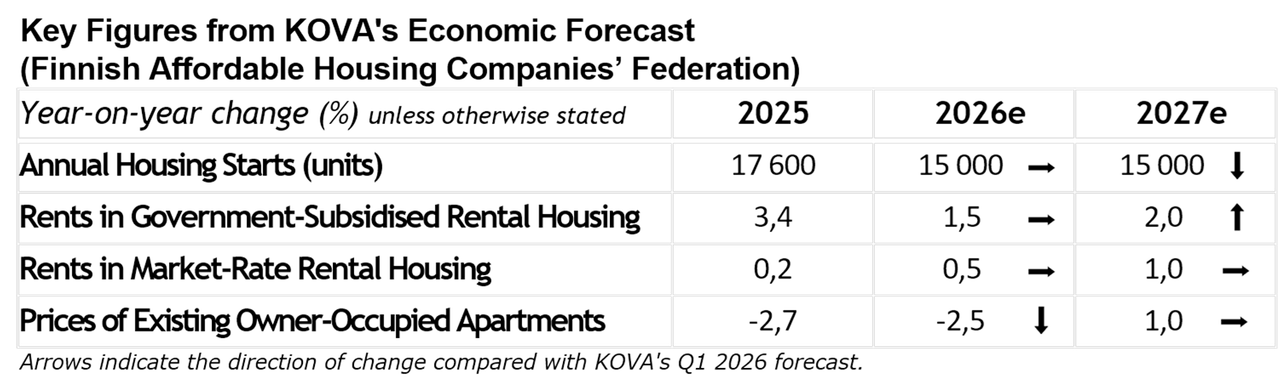
Despite improving occupancy rates, near-term rental growth prospects have remained soft. According to Lumo, rent increases are still expected to remain moderate in the short term, although the outlook for the rental market towards 2027 has become more positive. KOVA forecasts that non-subsidised rents will increase by 1 % in 2027. According to Nordea’s 20 October review, rent increases are unlikely to keep pace with inflation next year. We expect the positive market development to be reflected primarily in higher occupancy rates, although seasonal variation will continue to cause some fluctuations.
“The rental market’s supply peak is firmly behind us, and occupancy rates among professional investors have returned to early-2020s levels. Rental growth forecasts nevertheless remain soft, as the high number of listings on rental platforms continues to give tenants plenty of choice. According to the Finnish Landlord Association, institutional investors account for only around 28% of Finland’s rental housing, meaning they also compete for tenants with private landlords and state-subsidised housing providers. The recovery in professional investors’ occupancy rates has not eliminated competition for good tenants, making tenant acquisition and retention as important as ever. The market still requires patience, but rising occupancy rates and expectations of continued improvement suggest that patience will pay off,” summarizes INNA’s real estate analyst Anton Takkavuori.
Studios Shine, Shared Apartments Struggle
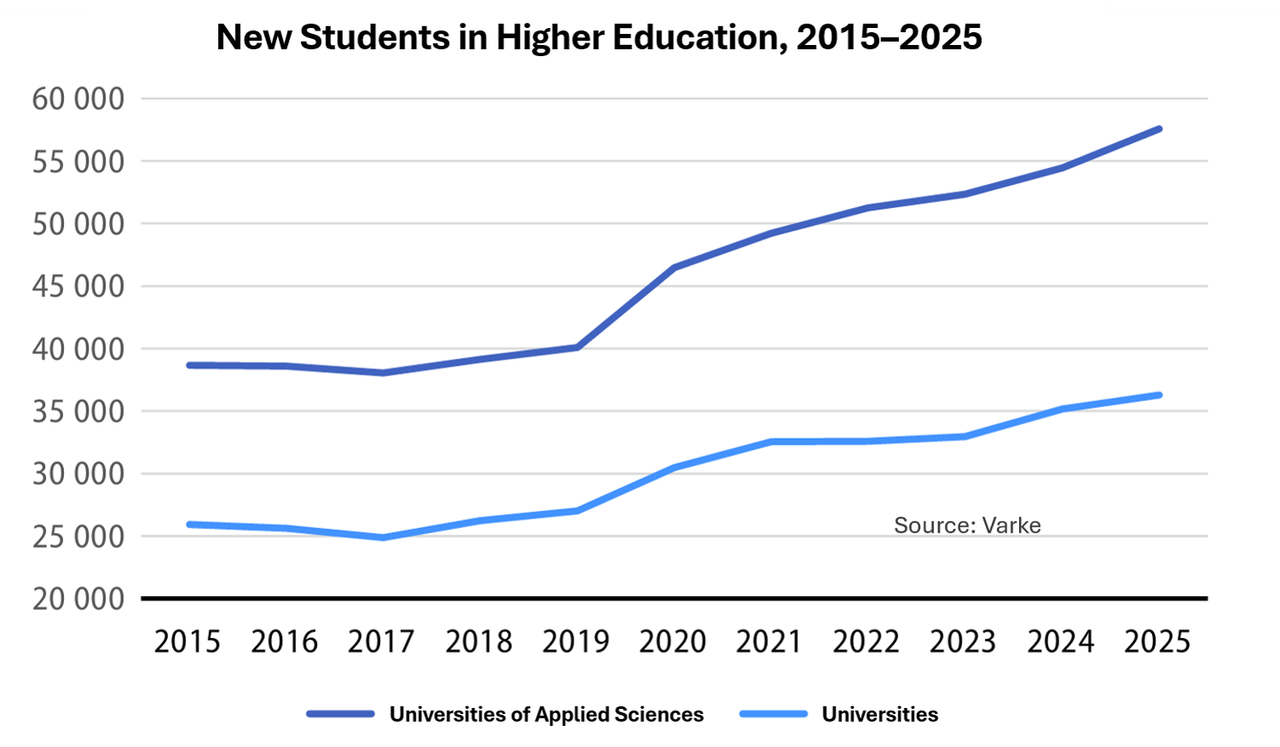
The number of higher education students has increased by 18% since 2020, driven particularly by growth in the number of international students. With good reason, the student moving season takes centre stage in the rental market in Q3.
Student housing preferences were explored in a joint survey conducted in spring 2026 by the Finnish Student Housing Association SOA and the National Union of University Students in Finland SYL. The results indicate that cuts to student finances have not reversed the long-term rise in the popularity of living alone and studio apartments. A student studio was the most common first choice among respondents. If one is unavailable, students are more likely to turn to a market-rent studio than to a shared apartment.
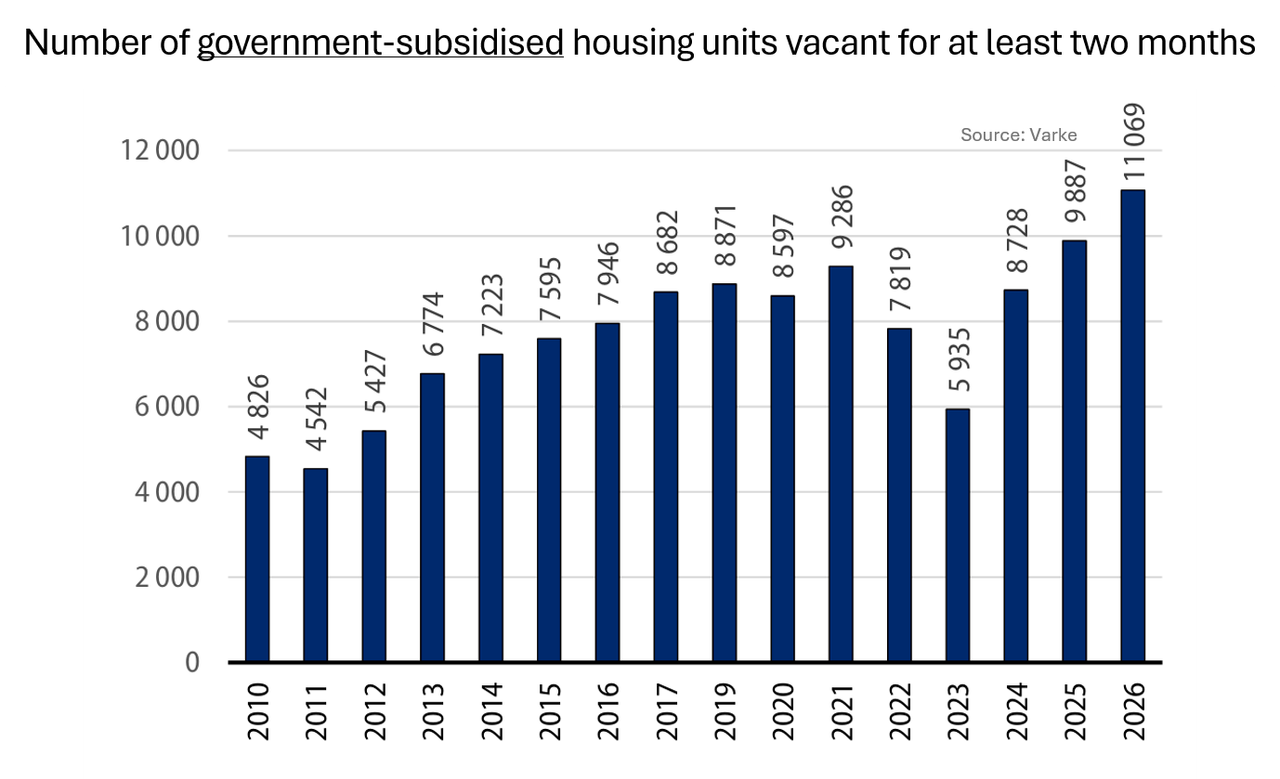
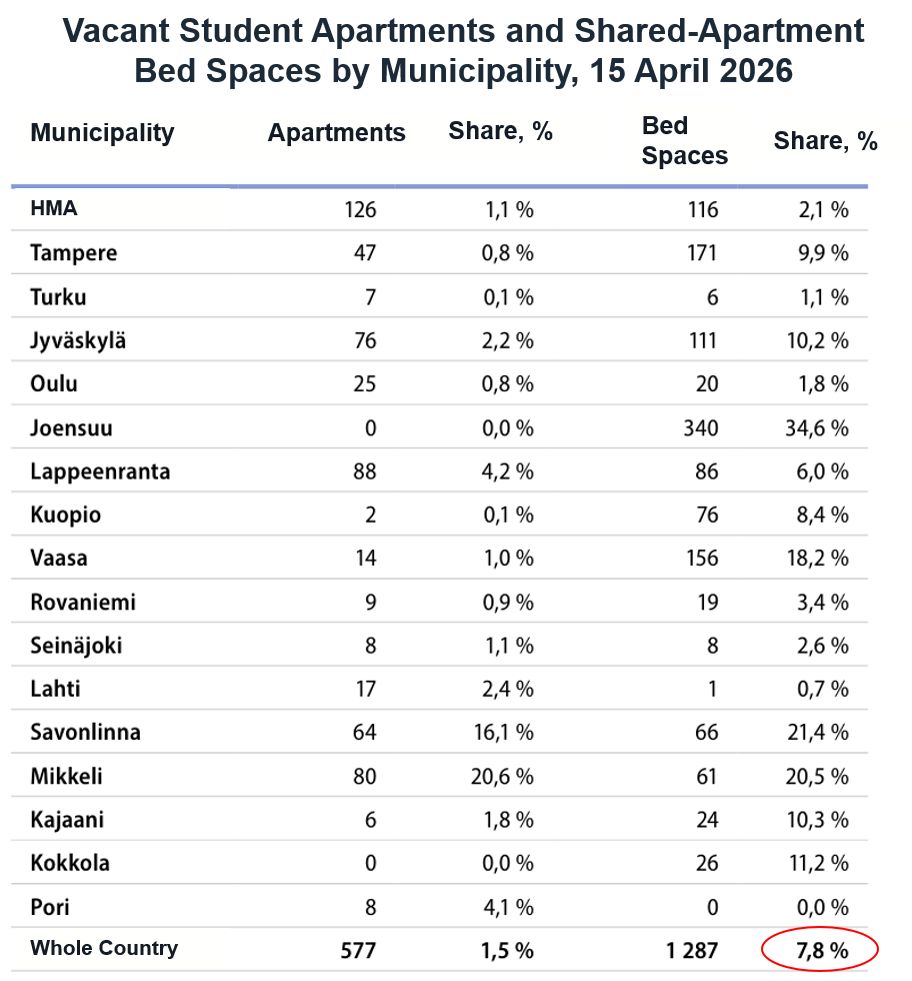
These preferences are also reflected in actual demand. According to Varke, occupancy rates in student housing typically range from 95% to 99% in major cities. In April 2026, only 1.5% of student housing was vacant nationwide. The timing of the data should, however, be kept in mind. Vacancies increase towards the summer as students graduate and move away, while demand picks up again in late summer and September. The student housing market therefore typically tightens during the autumn moving season before softening again towards spring.
The picture is quite different for shared apartments. In April 2026, 7.8% of rooms in shared apartments were vacant, with substantial regional differences compared with other student housing. In Joensuu, for example, no regular student apartments were vacant, while more than a third of rooms in shared apartments were unoccupied. A similar pattern was seen in Tampere, Jyväskylä and Vaasa, where vacancy in regular student housing remained low but considerably more rooms were available in shared apartments. In Varke’s 2026 housing market survey, student housing providers identified weak demand for shared apartments as the main factor behind vacancies in student housing.
Finns Leave the Nest Early
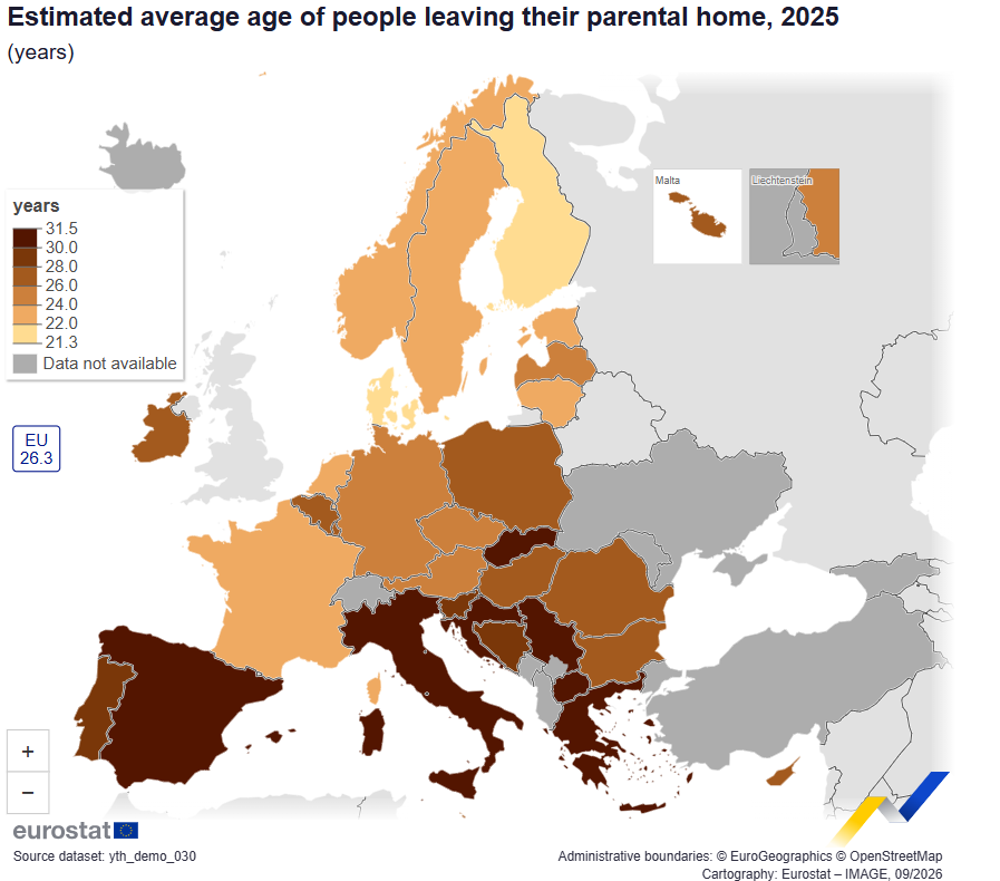
For many students, being accepted into higher education also opens the door to their first rental home. Young Finns become independent early by European standards, moving out of their parents’ homes at the youngest age in the EU.
According to Eurostat data published on 15 September 2026, young Finns leave the parental home at an average age of 21.3. This is around five years earlier than the EU average, with an even wider gap compared with Southern European countries.
Young people moving out early is, however, only one of the structural demand drivers in the rental market. According to KOVA’s analysis published on 9 October 2026, the trends towards single-person households, non-subsidised rental housing and apartment living are set to continue. (Source: Pääekonomistin analyysi: Vuokra-asumisen, kerrostalojen ja yksinasumisen trendi jatkuu – KOVA ry).
Over the long term, these trends support the rental housing market. In the short term, however, a stronger recovery will also require an improvement in the economic cycle. According to Pellervo Economic Research PTT, stronger economic growth, improving employment and a recovery in consumer confidence are key to a sustainable recovery in the rental market.
Sources: The Centre for State-Subsidised Housing Construction (Varke), Lumo Homes, Pellervo Economic Research (PTT), KTI Finland and the Finnish Affordable Housing Companies’ Federation (KOVA).