
Share
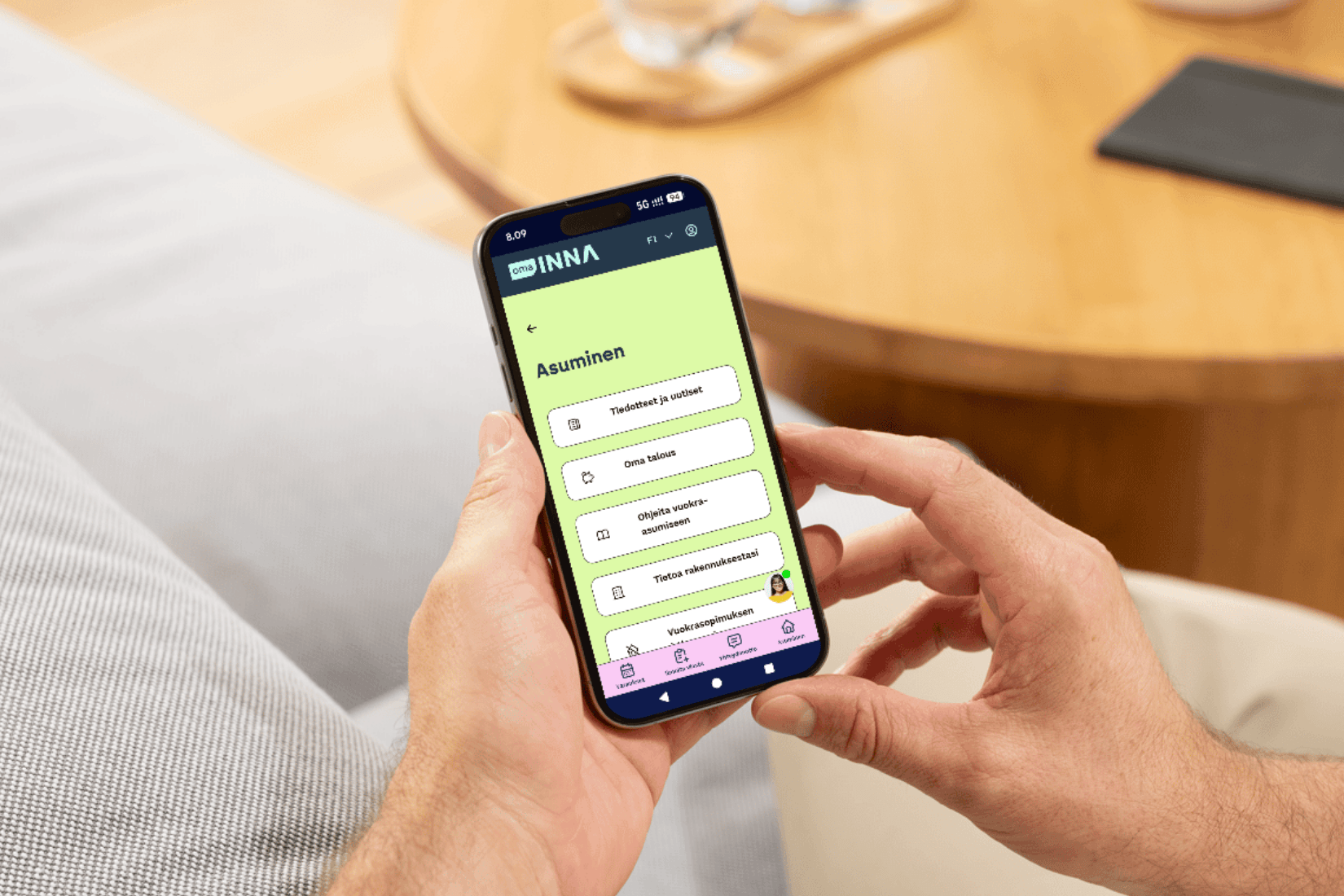
As of the beginning of October, tenants are required to inform their landlord of all persons living in the apartment and keep this information up to date. For INNA’s tenants, this can be done with just a few clicks in the OmaINNA service. Landlords, i.e. INNA’s clients, do not need to take any action.
The new occupant notification requirement applies to all tenancies, including existing ones. In addition to reporting who lives in the apartment, tenants must also state the basis on which each person resides there. Previously, occupant information has mainly been provided to the property maintenance company, for example for updating the names on the apartment door.
“Up-to-date occupant information provides tangible benefits for landlords, for example when residents need to be contacted quickly or disturbances need to be investigated,” explains INNA’s Director of Customer Relations, Juulia Laine.
The information must be updated whenever the situation changes, for example when a child is born into the family or an occupant moves out.
An occupant register that stays up to date
To support the new occupant notification requirement, INNA built a new feature in OmaINNA, the digital service used by tenants to view invoices, submit maintenance requests and book sauna slots. Going forward, tenants will be able to view their occupant information in the service and update it easily whenever their situation changes.
“Few people remember what information they provided to their landlord five years ago. In OmaINNA, the information can always be checked and easily updated,” Laine says.
Landlords are required to inform tenants of the new obligation without delay. INNA sent the first notification to its clients’ tenants already in September, and at the beginning of October they are asked to report the occupants of their apartment and check their own contact details in OmaINNA.
Going forward, the information will also be used to calculate water charges based on the number of occupants, while an up-to-date register will make communication easier. Tenants are responsible for the accuracy of the information they provide. A written notification also helps resolve any potential discrepancies, as both parties have access to the same information.
Email and text messages instead of a process server
In the rental market, it has been common practice to deliver legally verifiable notices, such as warnings, notices of termination and notices of lease cancellation, to tenants through a process server. This has resulted in additional costs for landlords and slowed down the handling of such matters. The new law introduces electronic notification as an alternative, saving both time and money.
Going forward, ordinary notices related to the tenancy can also be delivered by email if the tenant chooses electronic notification as their preferred method. New tenants make this choice as part of the rental process, while existing tenants can make the selection in OmaINNA.
“When notices are delivered more quickly, issues related to the tenancy can be resolved earlier, helping to safeguard the landlord’s rental income. For tenants, an electronic channel means that the information reaches them immediately and does not get lost in the mail,” Laine says.
Security deposits to be returned within two weeks
Following the entry into force of the new law, the security deposit must be returned within 14 days of the end of the tenancy. If part of the deposit is withheld, for example due to a missing key, the tenant must be informed within the same period of the reason and the estimated amount to be withheld. Any undisputed portion of the deposit must be returned without delay, even if the relevant invoice has not yet been received.
The requirements introduced by the new law have been incorporated into INNA’s processes, and system solutions support the smooth and timely handling of security deposits. A great deal is changing behind the scenes, but INNA takes care of deadlines and ensures that the processes work smoothly on behalf of its clients, while making things easier for tenants.
“The new practice makes the handling of security deposits clearer. For tenants, the process will be faster and more transparent. From our perspective, a clear deadline and precise requirements also make the process more consistent and predictable,” Laine says.
Smooth for tenants, effortless for landlords
The law was published in June, just before the holiday season, leaving a tight schedule for the necessary legal and technical changes.
“At first, the legislative change seemed enormous. Both the occupant notifications and the changes to the security deposit process required a great deal of work, and we refined the implementation several times. I’m proud of the effective solution we were able to build in such a short time,” Laine says, thanking all INNA employees involved in implementing the changes.
INNA also updated its lease agreement templates to comply with the new law. Many of the legislative changes had already been taken into account in its clients’ lease agreements, including the smoking ban and the provision that the moving date coincides with the last day of the tenancy. The most significant changes to the agreement templates concerned the duration of the lease and the method of notification. Like the updated agreement templates, the necessary system solutions were completed before the law entered into force.
“We wanted to use digital solutions to make it as easy as possible for tenants to meet the new requirements. A smooth tenant experience also benefits our clients,” Laine emphasises.
For INNA’s clients, the legislative change was equally effortless. INNA took full responsibility for implementing the changes, meaning that its clients did not need to spend time preparing for them.
Lisätietoja