
Share
The real estate industry is entering a new phase where artificial intelligence is no longer discussed as a standalone tool, but as an integral part of decision-making. This was the key message of the Kiinteistö Talks event, organized by INNA and Bonnier Business Forum, where experts in real estate investment, data, and analytics explored how AI is reshaping the industry.
One question ran throughout the event: when the best AI tools are available to everyone, where does real competitive advantage come from? The shared conclusion was clear. Competitive advantage does not come from AI itself, but from the ability to leverage data, identify meaningful signals, and make better decisions in the face of uncertainty.
AI is shifting the focus from analysis to decision-making
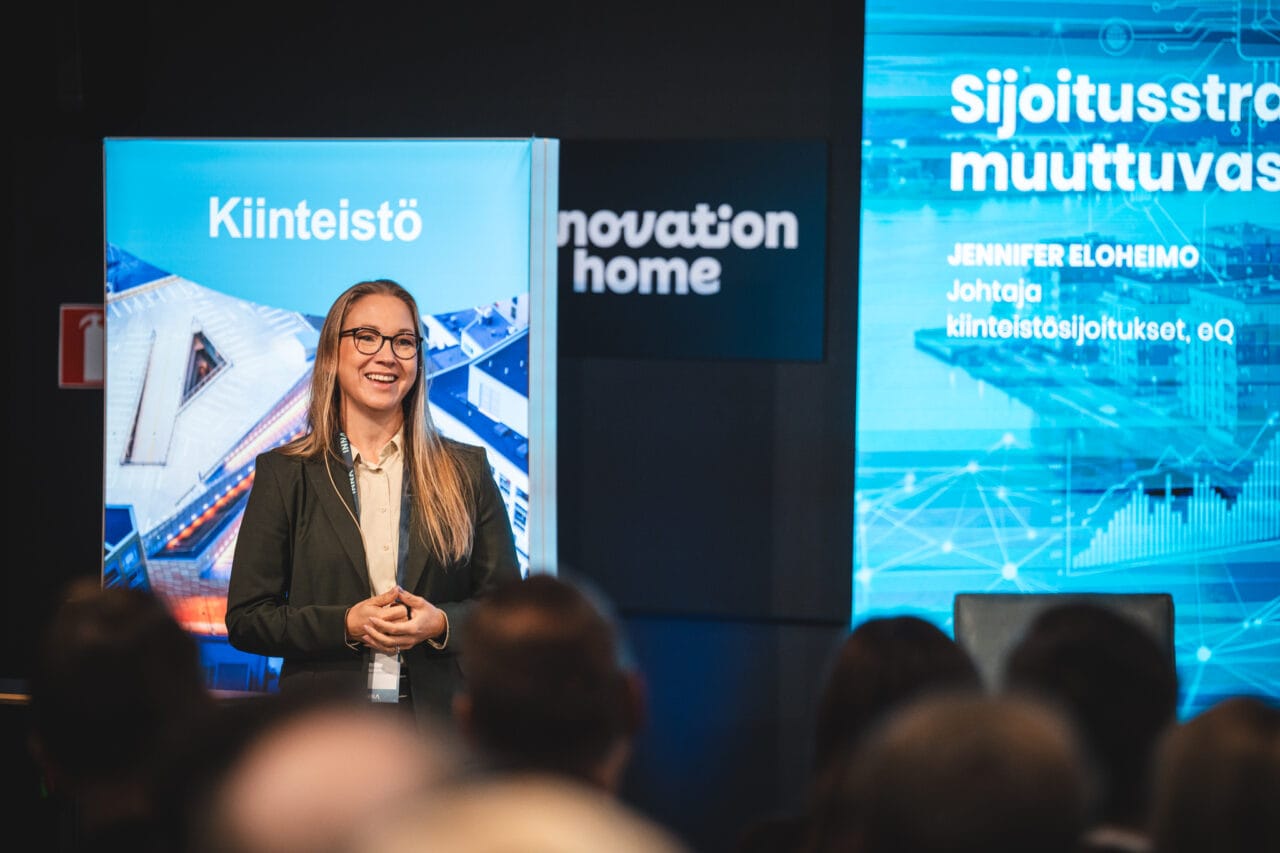
In her presentation, Jennifer Eloheimo, Head of Real Estate Investments at eQ, emphasized that competitive advantage will not come from differences between AI models. Instead, it will come from how effectively organizations manage their data and use analytics to support decision-making. As analysis becomes faster and increasingly automated, the focus shifts from computation to interpretation and the business decisions that follow.
The same message was echoed throughout the event: AI can generate more information than ever before, but the value of that information still depends on how effectively it is put into practice.
Operational data reveals what happens next
Anton Takkavuori, Real Estate Analyst at INNA Finland, explored residential investment through the lens of operational data. According to Takkavuori, traditional market data often tells us what has already happened, whereas operational data can help identify changes before they become visible in official statistics. Data generated throughout the leasing process continuously provides new signals about demand, customer behavior, and market direction.
Paavo Karlin, Development Director at INNA Finland, also highlighted the critical role of data. In the age of AI, success depends not only on the quantity of data, but also on its quality, structure, and usability. A strong data platform must simultaneously support reporting, dashboards, and AI solutions. If the underlying data is not reliable, neither are the insights produced by AI.
Within months, AI agents may be capable of managing the entire rental process on behalf of individuals, from securing a new apartment to terminating an existing lease.
Agents increase capacity, not replace expertise
Oskari Isolauri, Fund Director at CapMan Real Estate, reminded the audience that better analytics do not automatically lead to better decisions. Alongside data, organizations need a deeper understanding of users, properties, and market developments. Particularly valuable is so-called “soft data,” including tenant experiences, behavioral patterns, and early indicators of changes in local markets.
AI agents were another major topic of discussion throughout the event. Rasmus Juul-Nyholm of INNA Denmark, widely recognized as a visionary in the real estate sector, described how AI agents are already handling a significant share of information gathering, analysis, and preparatory work. He predicted that within months, AI agents may be capable of managing the entire rental process on behalf of individuals, from securing a new apartment to terminating an existing lease.
Despite the rapid pace of technological development, the consensus remained that AI expands the capacity of experts rather than replacing experience, judgement, or the ability to identify what truly matters.
The impact of AI may not be limited to making decisions more efficient. Over time, it could fundamentally alter the structures and demand patterns that underpin the real estate market.
Will AI also change demand for real estate?
The event’s second panel discussion examined the future of the real estate market itself. Sanna Puhakainen, CEO of Fokus Nordic, Jouni Levo, Head of Capital Markets at CBRE, and Risto Aro, Senior Portfolio Manager at Mandatum Asset Management, explored whether AI’s impact could extend beyond decision-making and ultimately reshape the built environment.
If AI changes how people work, it may also change how space is used and what kinds of properties will be needed in the future. Puhakainen highlighted flexibility and adaptability as key competitive advantages for future buildings, while Aro raised the question of whether future demand for space will resemble today’s at all. The discussion did not offer definitive answers, but it raised an important point: the impact of AI may not be limited to making decisions more efficient. Over time, it could fundamentally alter the structures and demand patterns that underpin the real estate market.
AI can help organizations make better decisions, but it is still people who make the decisions that create better properties and better user experiences.
The most important takeaway
Perhaps the most important conclusion from Kiinteistö Talks was that future competitive advantage will not come from individual AI solutions. As analytical tools become widely available, success will increasingly depend on data quality, effective processes, the ability to identify meaningful signals, and the experience needed to turn information into decisions.
From INNA’s perspective, this is ultimately the same principle that guides successful property management: the best outcomes are achieved when technology, data, and human insight work together. AI can help organizations make better decisions, but it is still people who make the decisions that create better properties and better user experiences.
Photos from the event: Mikke Pöyhönen